
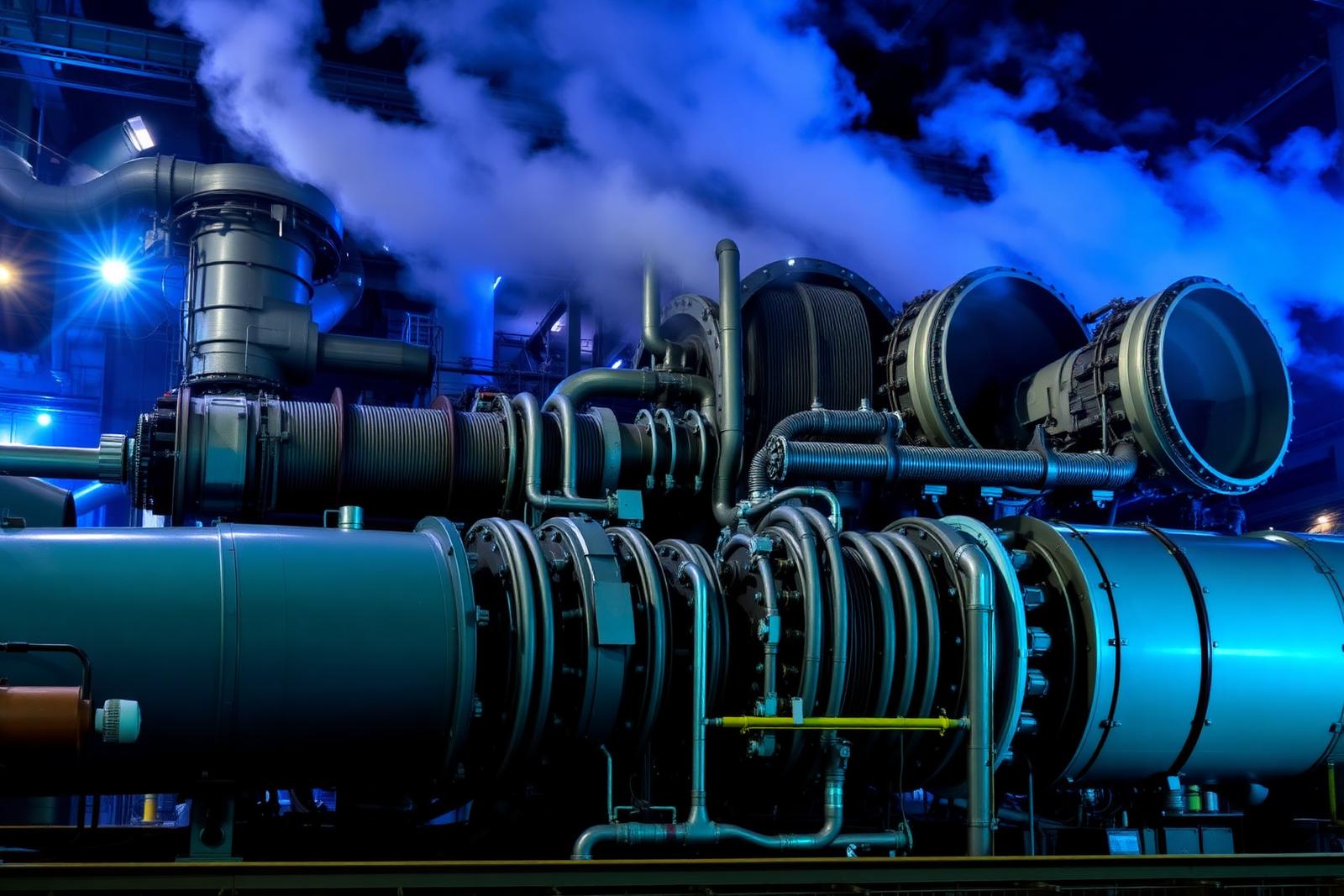
HRSG Cleaning and Heat Recovery Steam Generator Services
Specialized dry ice blasting for HRSG units — finned tube bundles, SCR and CO catalyst beds, ammonia injection grids, duct burners, and inlet houses. Restore backpressure and heat rate without water or chemicals.
Schedule an AssessmentWhy Dry Ice Blasting
Combined-cycle plants lose efficiency as iron oxide, ammonia bisulfate, and combustion residue build up on finned tubes and catalyst faces. Traditional washes introduce water, chemistry, and long drying time.
Our crews mobilize for planned and forced outages with full containment, vacuum recovery, and trained HRSG technicians. The result: lower backpressure, recovered MW, and a dry, ready-to-fire unit when you're done.
Applications
- HRSG tube bundles
- SCR catalyst cleaning
- CO catalyst cleaning
- Ammonia injection grids
- Finned tube cleaning
- Duct burners
- Inlet houses
- Stack and breeching
Air Lancing vs Dry Ice Cleaning for HRSG and Catalyst Fouling
Most HRSG cleaning decisions come down to one question: is the fouling loose or bonded? Air lancing and vacuuming is the standard first pass for loose material. Lances driven between tube rows and through catalyst channels dislodge dry particulate, and vacuum recovery pulls it out of the unit. It is quick, it needs no consumable media, and on a lightly fouled unit it can restore most of the lost pressure drop by itself.
Bonded fouling is a different problem. Ammonium bisulfate formed during cycling, iron oxide carried over from the steam side, and oily combustion residue do not sit loose on the surface — they adhere to it. Air pressure high enough to shear that film off aluminized fin is also high enough to bend the fin, and inside SCR or CO catalyst it risks channel damage and washcoat loss. That is the ceiling air lancing runs into, and it is usually the reason a unit gets lanced and still does not come back to target backpressure.
Dry ice cleaning attacks the bond rather than the deposit. Pellets hit the fouling, chill it until the deposit and substrate contract at different rates, and flash to gas at roughly 700 times their solid volume — lifting the film off from underneath. Because the pellet disappears, nothing is left in a catalyst channel or between fin rows to become a future flow restriction. Nothing abrades the fin or the washcoat.
On a badly fouled unit the economical sequence is both, in order: lance and vacuum the loose particulate out, then dry ice clean the bonded film that remains. Lancing first means less bonded surface to treat and shorter blast time; dry ice second means the pressure recovery actually holds. If your unit was lanced last outage and differential pressure came back within months, bonded fouling is the likely reason and lancing again will produce the same result.
We perform the dry ice cleaning in house and coordinate the lancing scope through subcontracted lancing crews, so a combined outage scope stays under one point of contact, one schedule, and one safety orientation instead of two vendors working around each other in the same cabinet.
Frequently Asked Questions
What is HRSG dry ice cleaning?+
HRSG (Heat Recovery Steam Generator) dry ice cleaning uses solid CO2 pellets accelerated by compressed air to remove iron oxide, ammonia salts, and combustion residue from finned tubes and catalyst surfaces without water, chemicals, or abrasive media.
Will dry ice blasting damage HRSG fins or catalyst beds?+
No. Dry ice is non-abrasive (Mohs hardness ~2) and sublimates on contact. When operated by trained technicians at correct pressures, it cleans aluminized fins, SCR, and CO catalysts without bending fins or eroding washcoat.
Is dry ice cleaning better than air lancing for HRSG catalyst?+
They solve different halves of the problem. Air lancing with vacuum recovery moves loose particulate out of catalyst channels and off finned surfaces, and it is fast and inexpensive. It does very little against bonded fouling — ammonium bisulfate, iron oxide, and oily combustion residue that has adhered to the surface. Dry ice cleaning breaks that bond through thermal shock and micro-expansion, so it recovers pressure drop that lancing alone leaves behind. On heavily fouled units the two are sequenced: lance the loose material first, then dry ice clean what remains. Our crews perform the dry ice cleaning, and we coordinate the lancing portion through subcontracted lancing crews when a scope calls for both — so you manage one scope and one schedule.
How much pressure recovery can we expect after HRSG cleaning?+
Most plants see backpressure reductions of 1–3 inches of water column and measurable heat-rate improvements after a full HRSG cleaning, depending on baseline fouling.
How do we know whether the fouling is loose or bonded?+
Two quick indicators. If differential pressure climbed gradually over many operating hours and the deposit wipes off dry as powder, it is largely loose particulate. If pressure drop rose after cycling or ammonia-injection upsets, and the deposit is a hard, slightly greasy or crusted film that resists a wipe, it is bonded and will not respond to air alone. Send us borescope photos and we will tell you which one you have.
Can you work during an outage?+
Yes. We mobilize 24/7 for planned outages and forced outages nationwide. Most HRSG cleaning scopes are completed in 2–5 days depending on access and unit size.
Do you need water, drains, or containment?+
No water and no chemical drainage. We bring our own air, ice, vacuum recovery, and containment. The only waste stream is the loosened fouling itself.
Schedule HRSG Cleaning for Your Next Outage
Call (866) 648-0030 to plan scope, mobilization, and crew size.